


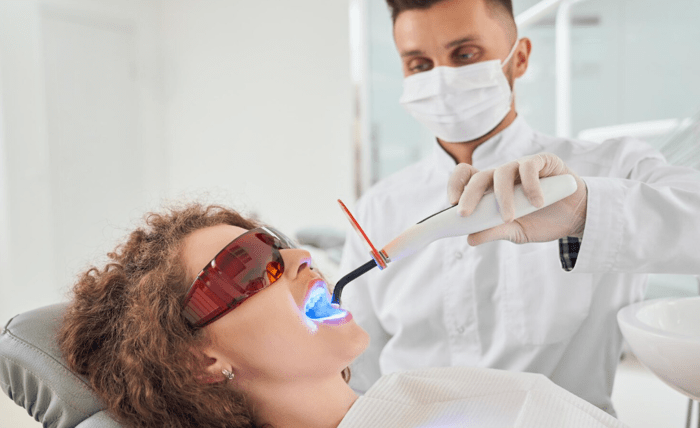
Laser teeth whitening is one of the most sought-after cosmetic dental treatments for international patients visiting Turkey, both as a standalone procedure and as the opening step in a broader smile makeover. The treatment takes approximately 60–90 minutes, requires no anaesthetic, and delivers results that would take weeks to achieve with home-use products. Combined with Antalya’s direct flight connections from the UK and Europe, whitening is popular as a day-treatment addition to broader dental visits — or as a standalone trip for patients who want professional-grade results without the UK private clinic price tag.
How Laser Teeth Whitening Works
Professional laser whitening uses a hydrogen peroxide or carbamide peroxide gel applied directly to the tooth surfaces. A high-intensity laser or LED light is then directed at the teeth, accelerating the bleaching reaction and allowing a deeper level of whitening than is possible with at-home products, which use lower-concentration gels for safety reasons. The procedure is carried out in the dental chair and typically involves three to four rounds of gel application and light activation within a single session. A desensitising treatment is often applied at the end to reduce post-procedure sensitivity.
In-Clinic vs At-Home Whitening: Key Differences
| Factor | In-Clinic Laser Whitening | At-Home Whitening Kits |
| Treatment time | 60–90 minutes | 2–4 weeks |
| Gel concentration | Professional strength (25–40% HP) | Lower concentration (10–15% CP) |
| Result depth | Multiple shades in one session | Gradual lightening |
| Cost in Turkey | €150 – €250 | €30 – €80 for kit |
| Cost in UK private | £300 – £700 | £80 – £300 for custom trays |
| Longevity | 12–24 months | 6–12 months |
2026 Laser Whitening Price Comparison
| Country / Region | Average Cost | Notes |
| UK (private in-clinic) | £300 – £700 | Brands such as Zoom, Enlighten, or Pola; significant variation between clinics |
| Germany | €250 – €600 | Not covered by statutory dental insurance |
| Antalya, Turkey (Dental Harmony Turkey) | £300 | Single in-clinic session; comparable results to UK equivalent brands |
The saving over UK private treatment is consistent — typically 50–60% — and for patients already visiting Turkey for other dental work, adding whitening to the schedule adds minimal additional time or cost to the overall trip.
Critical: Whitening Must Be Done Before Crown or Veneer Treatment
One of the most important clinical sequencing points for patients combining whitening with ceramic restorations is that whitening should always be completed first. Natural enamel responds to the bleaching process; ceramic does not. If a patient has crowns or veneers fitted and then whitens their natural teeth, the existing restorations will stand out as noticeably darker than the treated teeth. For this reason, Dental Harmony Turkey schedules whitening before any ceramic crown or veneer treatment. Patients considering E-max crowns in Antalya alongside whitening will have their ceramic shade finalised after the whitening session is complete, ensuring a perfect optical match between the restoration and the surrounding natural teeth.
What to Expect During and After Treatment
During the session: A gum barrier (rubber dam or liquid resin) is applied to protect the soft tissue. The whitening gel is then applied to the tooth surfaces in multiple rounds, each activated for approximately 15 minutes. The total chair time is 60–90 minutes.
Immediately after: Some patients notice a white, chalky appearance to the teeth in the first few hours after treatment — this is normal and resolves within 24–48 hours as the teeth rehydrate and the shade settles to its final level.
Sensitivity: Mild to moderate tooth sensitivity for 24–48 hours is common, particularly to cold. This is temporary. Using a desensitising toothpaste in the days before and after treatment helps manage this.
Maintenance: Avoiding highly pigmented foods and drinks (coffee, red wine, berries, curry) for 48 hours post-treatment helps lock in the result. Long-term, occasional at-home touch-up trays can extend the whitening effect for 12–24 months.
Who Is Suitable for Laser Whitening?
- Patients with yellow or brown surface staining from food, drink, or tobacco — the most responsive cases
- Age-related discolouration — teeth naturally darken over decades; whitening reverses this effectively
- Less suitable: Grey or antibiotic-stained (tetracycline) teeth — results may be partial
- Not suitable: Active decay, untreated gum disease, cracked teeth, or very sensitive enamel
- Not suitable: Crowns, veneers, or bonding — ceramic and composite do not respond to whitening
Is Laser Whitening Safe?
When performed by a qualified dental professional using appropriately calibrated equipment, laser whitening is considered safe and well-tolerated. The key risk factor is overuse or use on teeth with untreated decay or sensitivity — reasons why a professional clinical assessment should always precede treatment. At-home whitening kits purchased without dental supervision carry a higher risk of gum irritation and uneven results due to non-customised trays and inconsistent gel application.
Final Thoughts
At £300 in Antalya versus £300–£700 in the UK, laser whitening in Turkey is one of the more straightforward cost comparisons in dental tourism. For patients already travelling for a larger procedure, adding whitening to the schedule is an efficient use of clinic time and travel investment. Visit Dental Harmony Turkey for full details on Dental Treatment in Antalya and to confirm availability alongside other planned treatments.